
Active Warrants in Lancaster County
A warrant is a court order. It tells law enforcement to arrest a person, bring someone to court, or search a place. In Lancaster County, two parts of the court system create most warrants. The Court of Common Pleas issues bench warrants when a judge needs a person in court. The Magisterial District Courts issue warrants tied to traffic tickets, summary offenses, and unpaid fines. The Sheriff's Office then serves and tracks both kinds.
The Sheriff is Christopher R. Leppler. His office runs the Fugitive Apprehension and District Court Warrant Control unit, which carries the bulk of warrant work. The Clerk of Courts also handles warrants as part of keeping criminal records. So a single warrant can touch a judge, the Clerk of Courts, and the Sheriff before it is cleared. That is why checking more than one official source gives the clearest picture of whether a Lancaster County warrant is active.
Public warrant data is not one tidy list. The Sheriff posts a wanted persons page and a warrant-check link. Court dockets on the statewide system show many warrant events, such as a bench warrant issued or a warrant served. Records update on the court system's own schedule, so a brand new warrant may not appear online right away.
The Lancaster County Sheriff Warrant Check
The Sheriff's Office is the front door for a Lancaster County warrant search. Its Wanted Persons page carries a link that reads "click here to check if someone has a warrant," plus a separate link to submit a tip. This is the official, free way to flag a warrant tied to the county. The same office serves the warrant once a court issues it, so its records reflect active enforcement work.
You can reach the unit through the main Sheriff's Office page on the county website.
The Sheriff's Office home page links the warrant check and other services in one spot. View it on the Lancaster County Sheriff's Office page.
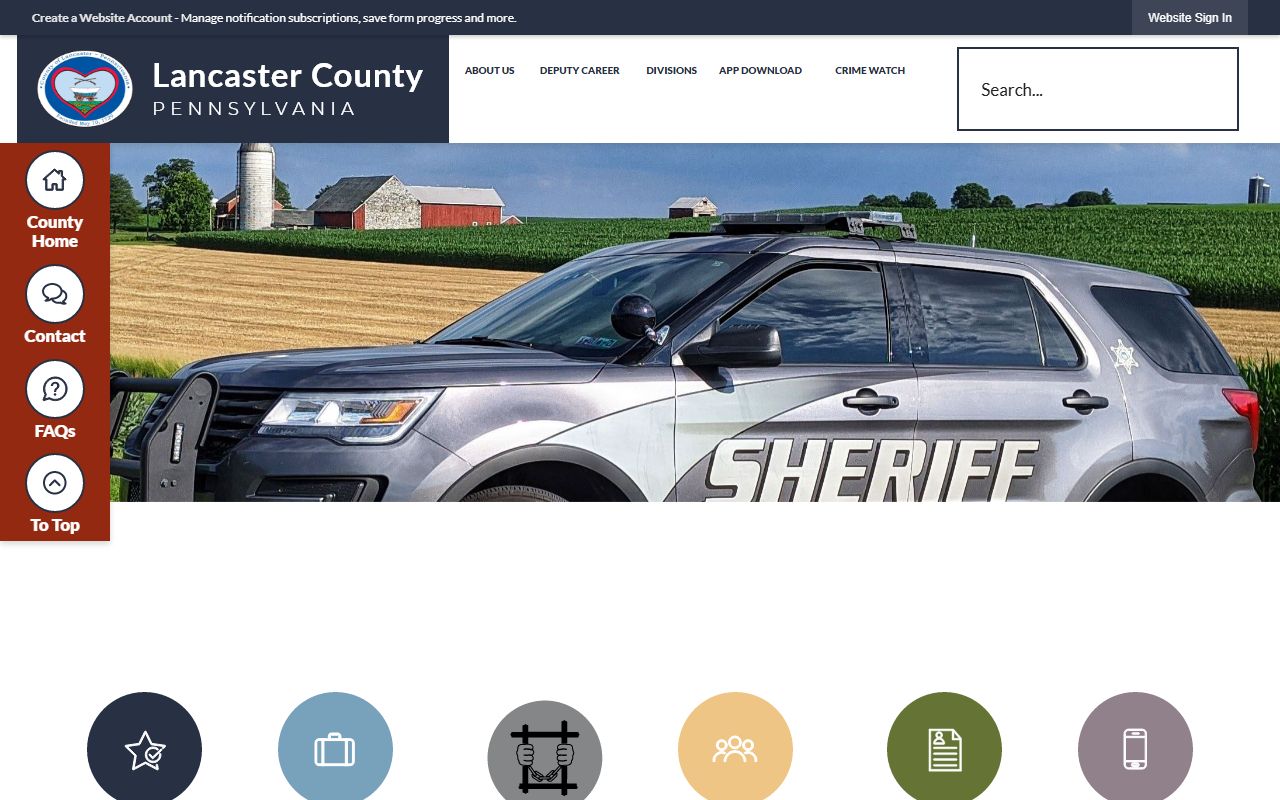
From there, the Wanted Persons section is where the public warrant check and tip line live. It is the page to bookmark for repeat checks.
The wanted persons tool is built for a quick yes-or-no style check on a name. Open the Lancaster County Sheriff Wanted Persons page to use it.

If the check flags a possible warrant, treat it as a starting point and confirm the details with the issuing court before you act.
Types of Lancaster County Warrants
Not all warrants mean the same thing. Some order an arrest. Some force a court date. Some let police search a place. The Sheriff's warrant unit serves a wide mix, including Domestic Relations warrants, probation and parole violation warrants, Prothonotary warrants, failure-to-appear bench warrants from the District Attorney, and state and federal warrants. The list below sorts the main kinds a person may run into.
- Bench warrant - issued by a Common Pleas judge when a person misses court, skips a payment, or violates a court order.
- Arrest warrant - authorizes police to take a named person into custody on a criminal charge.
- Failure-to-appear warrant - issued when a defendant does not show up for a scheduled hearing.
- Magisterial District Court warrant - tied to traffic tickets, summary offenses, and unpaid fines at the local level.
- Search warrant - lets law enforcement search a place or seize property; often sealed while a case is open.
Federal warrants are their own track. Ten Lancaster County deputies are sworn as Deputy U.S. Marshals, which lets the unit work federal fugitive cases alongside county ones. A federal warrant will not show on a county court docket.
Warrant Volumes in Lancaster County
The scale of warrant work in Lancaster County is large. The Sheriff's Fugitive Apprehension and District Court Warrant Control unit oversees roughly 4,000 Court of Common Pleas bench warrants at any time. That is only the top layer. The bigger number sits at the local minor courts, where the unit has oversight and service duty for about 65,000 traffic and non-traffic Magisterial District Court warrants.
Service runs at a steady pace. The unit is responsible for serving about 4,500 warrants each month. Pennsylvania State Constables handle roughly 1,000 of those monthly under the unit's oversight, which spreads the workload across more officers. These figures help explain why a warrant can take time to clear and why online status may lag behind real enforcement.
The Sheriff's duties page lays out these volumes and the rest of the office's enforcement work.
That page also covers courthouse security and prisoner transport. Read it on the Lancaster County Sheriff duties page.
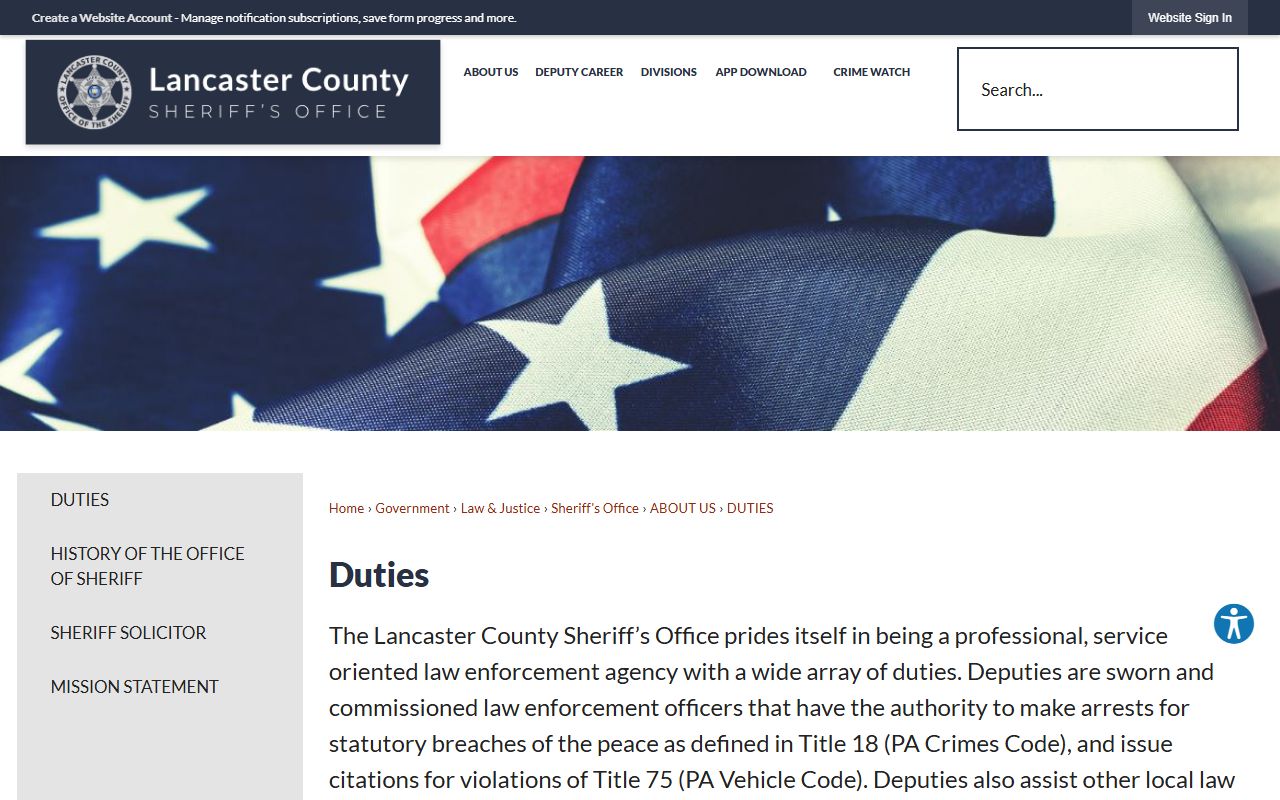
The same unit serves Domestic Relations, probation and parole, Prothonotary, and District Attorney bench warrants, which is why warrant work crosses several county offices.
How to Run a Lancaster County Warrant Search
A solid warrant search uses two official tools, not one. Start with the Sheriff's wanted persons check for a quick read on county warrants. Then cross-check the statewide Pennsylvania UJS Case Search, where many warrant events appear on a person's court docket. The UJS system covers Common Pleas and Magisterial District Court cases across Pennsylvania, so set the county filter to Lancaster to trim the results. Have a name or a docket number ready before you start.
Common Pleas dockets begin with CP. Magisterial District Court dockets begin with MJ. A docket can list a warrant event, such as a bench warrant issued or recalled, even when no separate public warrant list exists. The steps below walk through a clean search.
- Open the Sheriff's wanted persons warrant check and look up the person by name.
- Note any flag, then move to the Pennsylvania UJS Case Search to confirm court status.
- Pick a search type. Use participant name if you have no docket number, or enter a CP or MJ docket number directly.
- Set the county to Lancaster and read the docket entries for any warrant event.
- Call the issuing court or the Sheriff's Office to verify before you rely on the result.
For underlying charges behind a warrant, the arrest and criminal records page and the court dockets page go deeper into reading a case.
Lancaster County Warrant Search Fields
The two main tools use different inputs. The Sheriff's check is a direct warrant-check link, so most of the work happens after you click through to it. The UJS docket search asks you to pick a search type first, then fill in the matching field. Because warrant events live on dockets, the UJS fields below are what most people use to surface a Lancaster County warrant record online.
| Field Label | Type | Required | Notes |
|---|---|---|---|
| Sheriff warrant check link | Search link | Optional | Official "check if someone has a warrant" link on the Wanted Persons page. |
| UJS Search By | Dropdown | Yes | Participant Name, Docket Number, Citation Number, Complaint Number, OTN, or Incident Number. |
| Docket Number | Text | If selected | CP for Common Pleas warrants; MJ for Magisterial District Court warrants. |
| County | Dropdown | Optional | Choose Lancaster to narrow a statewide search. |
| Case Status | Dropdown | Optional | Active, Closed, and related values that can flag an open matter. |
The Sheriff's link is the first stop for a plain warrant check. The UJS fields are the way to tie that warrant to a court case and confirm its current status.
What a Lancaster County Warrant Record Shows
A public warrant check often gives a short answer. A court docket gives the detail. Because Lancaster County warrant events appear on UJS dockets, the docket fields tell you the most about a warrant and the case behind it. The table lists the fields most likely to show on a docket that includes a warrant event.
| Field | What It Shows |
|---|---|
| Docket Number | The case ID; CP for Common Pleas and MJ for Magisterial District Court. |
| Warrant Event | The action on the docket, such as a bench warrant issued, served, or recalled. |
| Issuing Court | The judge or Magisterial District Court that ordered the warrant. |
| Defendant | The named person the warrant applies to, with role on the case. |
| Charge / Case | The offense, statute, or matter the warrant is tied to. |
| Status | Whether the case or warrant is active, closed, or otherwise. |
| Hearing | Any scheduled court date linked to clearing the matter. |
| Bail / Payment | Bond set or money owed, where that detail is public. |
A docket field is not the whole file. Some warrants, such as sealed search warrants, will not show in a public search. Confirm anything that matters with the issuing court.
Warrant Payment Scam Warning
Scammers in Lancaster County pose as deputies or court staff. The pitch is almost always the same. They claim you have a warrant, then demand fast payment to make it go away. They want gift cards, prepaid money cards, or a quick payment by phone or online. Real offices do not work that way. A genuine warrant is cleared through the court, not through a stranger's phone call.
Important: The Sheriff's Office never demands gift cards, money cards, or online or phone payment for court costs, bail, or fines; hang up and call the office directly.
If you get a call like this, do not pay. Do not read off a gift card number. Hang up and call the Sheriff's Office at its published number to check. If a warrant is real, the office will tell you the right way to resolve it through the issuing court.
The Sheriff posts a contact page so you can reach the office directly to verify any claim.
Use the official channel rather than a number a caller gives you. The Sheriff's Office contact page lists the verified line.
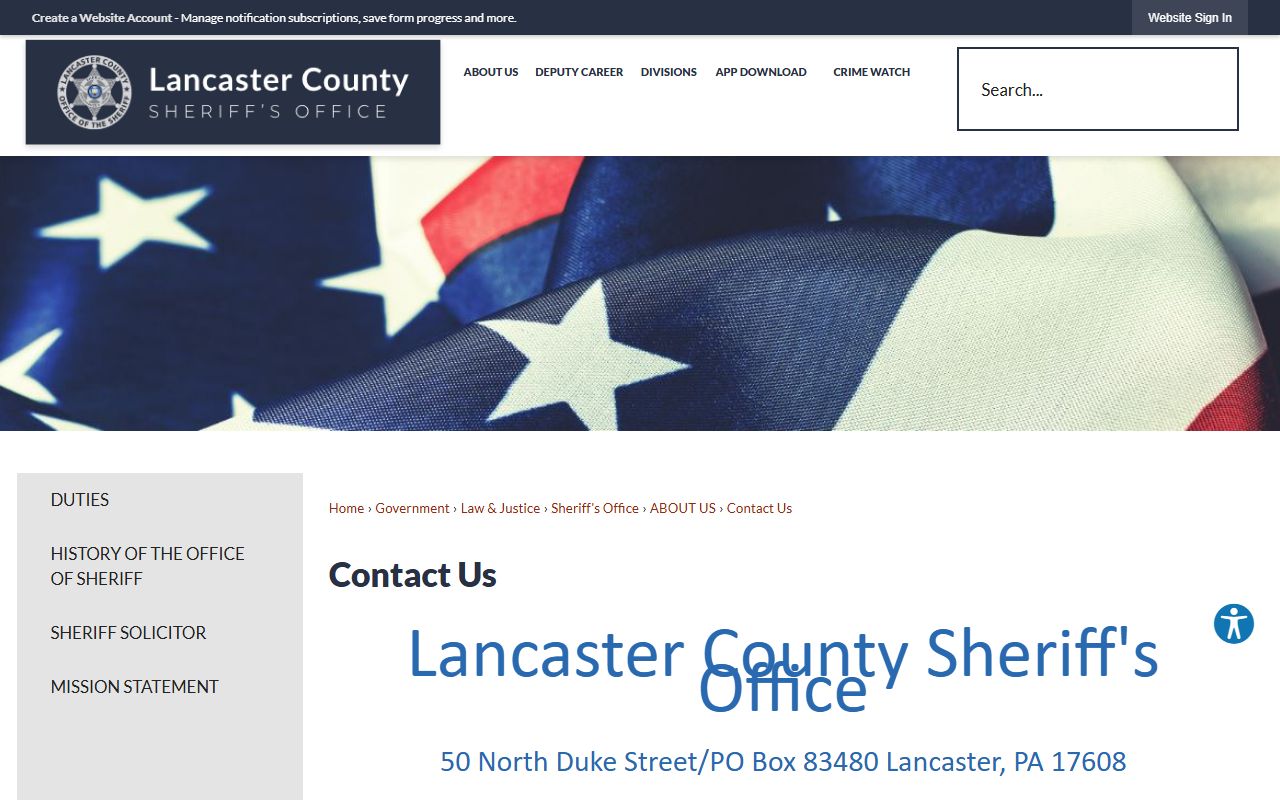
Calling the listed number is the safe way to confirm whether a warrant exists and how to handle it.
How to Resolve a Lancaster County Warrant
An outstanding warrant does not clear itself. It usually needs a court appearance or an order from a judge. The right path depends on the warrant. A missed court date, a missed payment, or a probation violation each clears in its own way. The safest move is to verify the warrant through an official source, then act through the issuing court or an attorney. The steps below give a general order.
- Verify the warrant through the Sheriff's warrant check, the UJS docket, or the issuing court. Do not rely on a third-party site alone.
- Find out which court issued it. For a Common Pleas criminal warrant, the Clerk of Courts and the Sheriff's Fugitive Apprehension unit may both be involved.
- Contact the issuing court, your attorney, or the Sheriff's Office for instructions before you turn yourself in.
- Expect a court appearance or a judge's action if the warrant ties to missed court, unpaid fines, or a probation or parole violation.
- If bond is set, follow official court or Sheriff payment instructions only. Never pay by gift card or to a caller.
- After it clears, check the UJS docket to confirm the status updated, and keep your receipts and any court orders.
A lawyer can sometimes arrange a surrender or a hearing that limits jail time. The county public defender serves people who cannot afford counsel. For broader case history behind a warrant, see the Lancaster County court records page.
Constables and Warrant Service in Lancaster County
Constables play a real role in warrant work here. They are elected or appointed peace officers who serve court process and warrants, often for the Magisterial District Courts. Under the Sheriff unit's oversight, Pennsylvania State Constables serve about 1,000 warrants a month in Lancaster County. That is a sizable share of the roughly 4,500 warrants served monthly.
This split matters for a warrant check. A warrant tied to a traffic ticket or a summary offense at a local Magisterial District Court may be served by a constable, not a sheriff's deputy. Either way, the resolution still runs through the issuing court. So when you confirm a warrant, ask which court issued it, since that is where the matter gets cleared.
Restricted Lancaster County Warrant Records
Some warrants are not open to a public search. A sealed search warrant stays private while a case is active, so it will not show on a docket the way a bench warrant might. Juvenile matters usually do not appear in a public search at all. Federal warrants run through the federal system, not county dockets, even though local deputies sworn as U.S. Marshals may help serve them.
Statewide court rules shape what a public docket search returns. Expunged and limited-access cases are pulled from open view, and sensitive personal data is redacted. So a clean search result is not always proof that no warrant exists. When the answer matters, confirm with the issuing court or the Sheriff's Office before you act.
Lancaster County Sheriff's Office Contact
The Sheriff's Office is the office to call for warrant questions and to verify any warrant claim. It sits at the courthouse in downtown Lancaster and serves warrants across the county. Use the card below to reach it directly rather than calling a number a stranger gives you.
Lancaster County Sheriff's Office
50 North Duke Street
P.O. Box 83480
Lancaster, PA 17608
717-299-8200
Fax 717-295-3656
Mon-Fri 8:30 a.m.-5:00 p.m.
Note: A warrant check is a starting point, so always confirm an active warrant and its terms with the issuing court before you make any payment or appear.