
How to Search Lancaster County Court Records
Lancaster County splits court records by type, so the search starts with the right tool. Civil cases from the Court of Common Pleas live in the Prothonotary's CountySuite Civil Public Search. Criminal, traffic, and Magisterial District Court dockets are searchable through the statewide Pennsylvania UJS Case Search. Probate and marriage records run through the Register of Wills Paperless Search. Pick the system that matches the record. The county court homepage links most of these tools in one place.
You can browse the Lancaster County Court of Common Pleas site to reach public access pages, the court calendar, and office contacts. It is a good first stop.
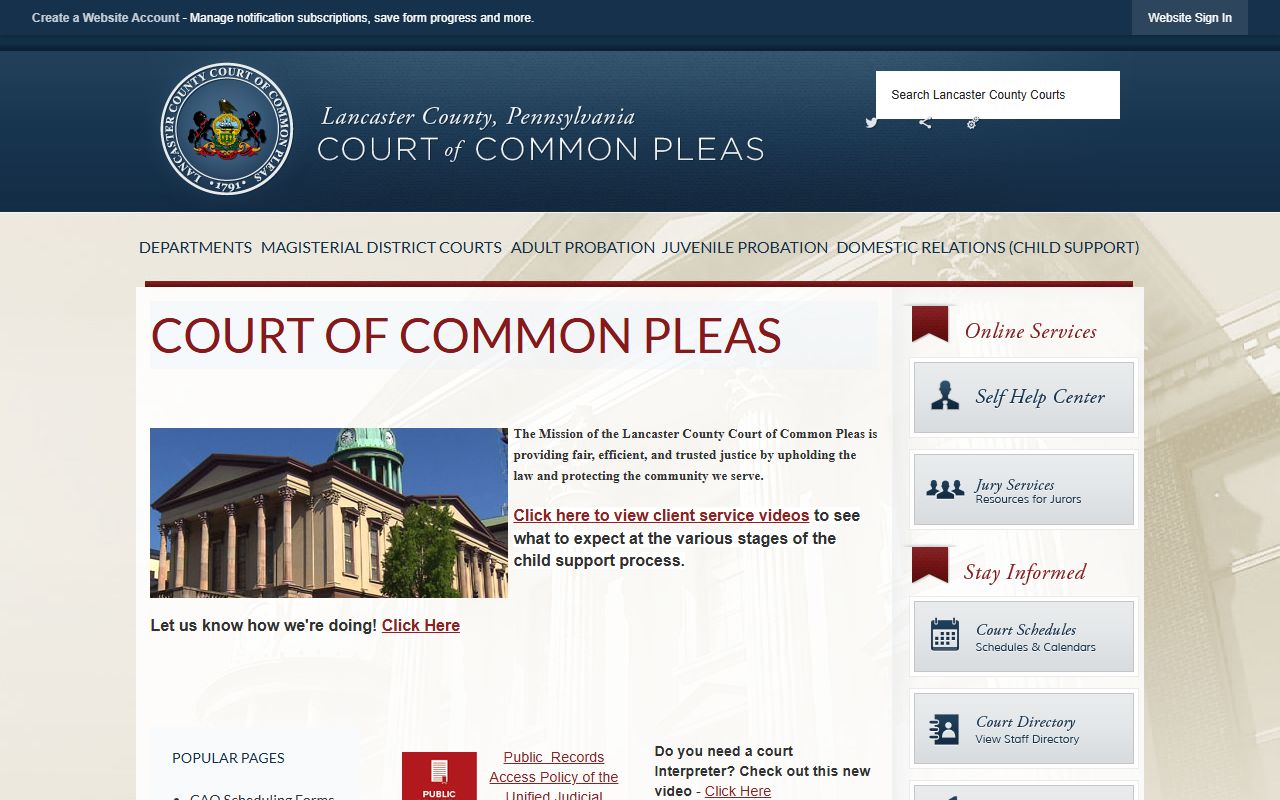
Before you start, gather what you have. A name, a docket number, a citation number, or a case category all help. The more you bring, the fewer false matches you get. Common Pleas dockets begin with CP. Magisterial District Court dockets begin with MJ.
- Pick the portal that fits your record: CountySuite for civil and family, UJS for criminal and traffic, Paperless Search for probate and marriage.
- Enter a party name or a case, docket, or citation number.
- Narrow the search by court type, county, and a filing date range.
- Open the matching case and read the docket entries.
- Request a certified copy from the filing office if you need one for court or legal use.
For criminal and traffic dockets, the Pennsylvania UJS Case Search covers cases across the state, including Lancaster.
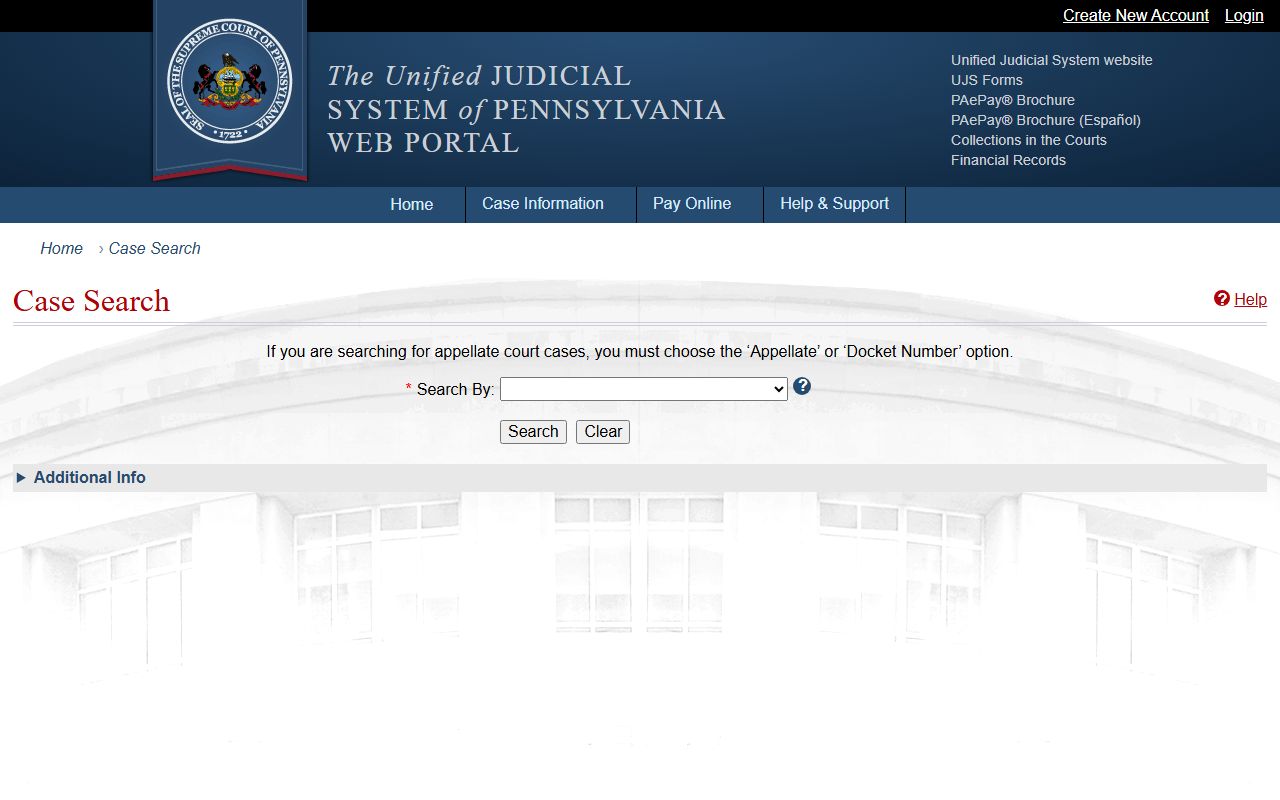
The UJS search lets you pick a search type before you type anything. The table below shows the fields most people use.
| Field Label | Type | Required | Notes |
|---|---|---|---|
| Search By | Dropdown | Yes | Docket Number, Participant Name, Citation Number, OTN, Complaint Number, or Incident Number. |
| Docket Number | Text | If selected | CP for Common Pleas cases; MJ for Magisterial District Court cases. |
| County | Dropdown | Optional | Choose Lancaster to narrow a statewide search. |
| Case Status | Dropdown | Optional | Active, Closed, Adjudicated, Inactive, and related values. |
| Date Filed range | Date | If date search | A 180-day limit applies to date-filed searches. |
The Lancaster County Judicial System
Pennsylvania runs a Unified Judicial System, and Lancaster County is its Second Judicial District. The Court of Common Pleas is the trial court of general jurisdiction. It hears major civil cases, criminal cases, family and juvenile matters, and Orphans' Court matters. It also hears appeals from the local Magisterial District Judges. Those minor courts handle the high-volume work: traffic citations, summary offenses, landlord-tenant disputes, small civil claims, and the first steps of a criminal case.
Appeals move up from there. Most criminal and private civil appeals go to the Superior Court. Many cases involving state and local government go to the Commonwealth Court. The Supreme Court of Pennsylvania is the final state court and supervises the whole system.
Case flow: Magisterial District Court › Court of Common Pleas › Superior Court or Commonwealth Court › Supreme Court of Pennsylvania
The statewide court system explains each level and its role.
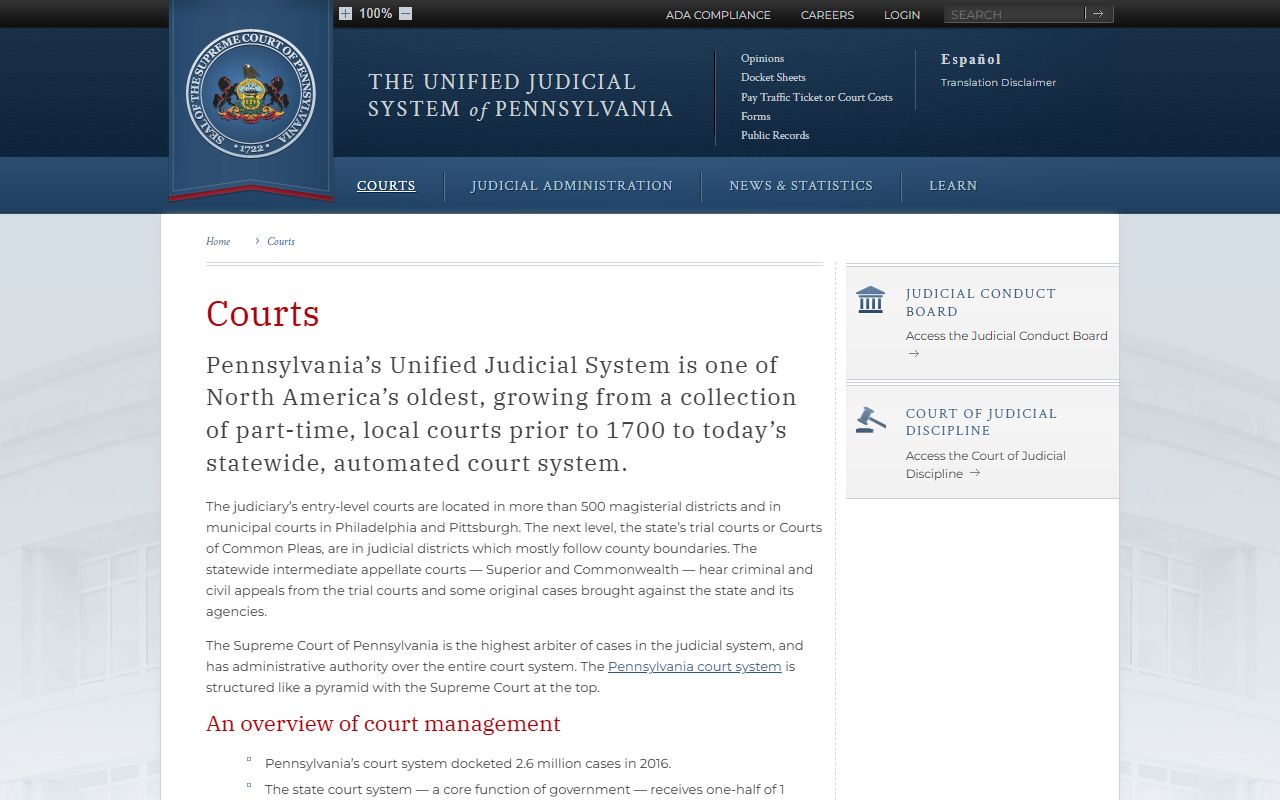
That structure tells you where a record lives and where a case can go next. A traffic ticket and a felony case can both start near the bottom and climb on appeal.
| Court | Jurisdiction | Case Types |
|---|---|---|
| Magisterial District Courts | Local minor courts | Traffic, non-traffic summary, landlord-tenant, small civil claims, preliminary criminal steps. |
| Court of Common Pleas | General trial court | Major civil, criminal, family, juvenile, Orphans' Court, and appeals from MDJs. |
| Superior and Commonwealth Courts | Intermediate appellate | Criminal and civil appeals; government and administrative matters. |
| Supreme Court of Pennsylvania | Court of last resort | Final state appeals; supervises the Unified Judicial System. |
Lancaster County has a wide ring of Magisterial District Judges across its towns. The official statewide list shows each court, judge, and address.
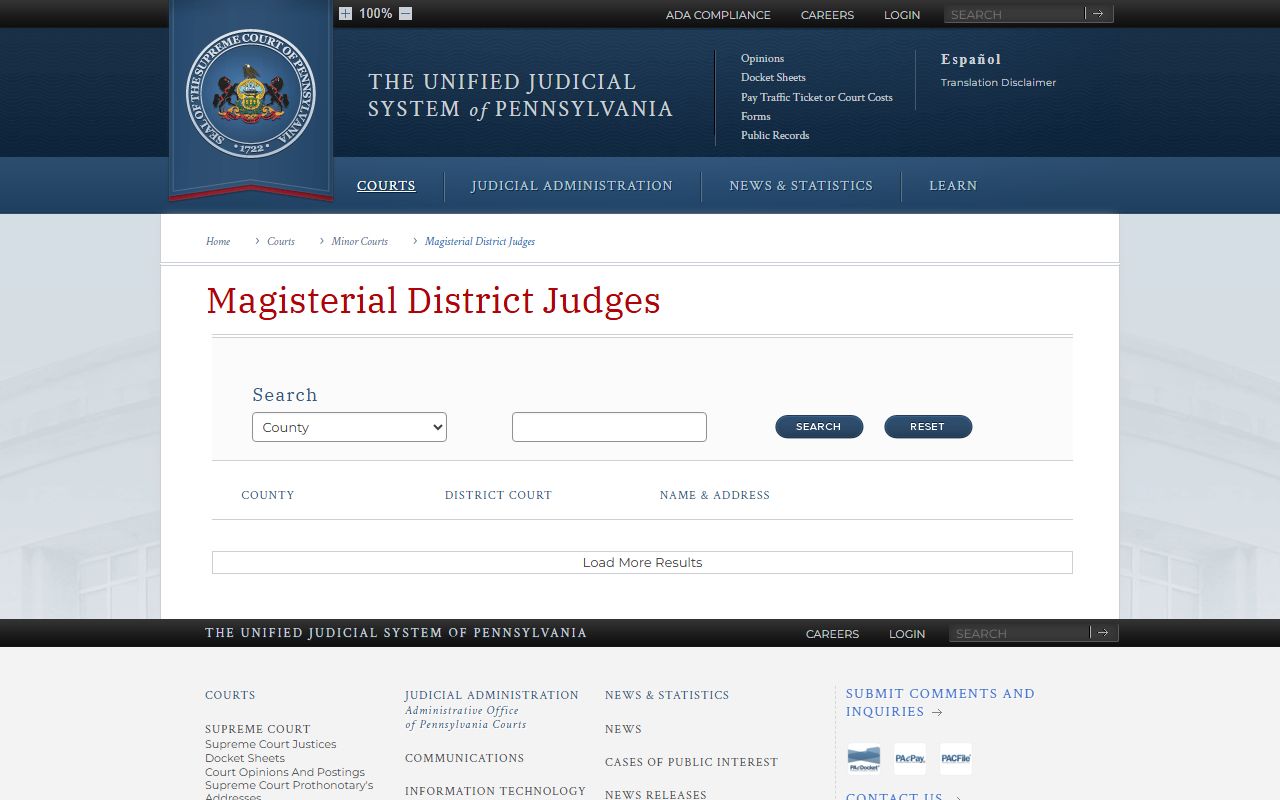
You can find the full Lancaster roster on the Court of Common Pleas page, which lists every Magisterial District Court with its address and phone.
Which Office Keeps Which Lancaster County Record
Pennsylvania does not use a single court clerk. Lancaster County divides the work among three offices, plus the minor courts and the federal system. The Prothonotary keeps civil records. The Clerk of Courts keeps criminal and juvenile records. The Register of Wills and Clerk of Orphans' Court keeps probate, estate, and marriage records. Match the record to the office and you will reach the right counter the first time.
| Record Type | Lancaster County Office | Search Tool |
|---|---|---|
| Civil, divorce, custody, PFA, judgments, liens | Prothonotary | CountySuite Civil Public Search |
| Criminal and juvenile | Clerk of Courts | UJS Case Search |
| Probate, estates, marriage, adoptions | Register of Wills / Orphans' Court | Paperless Search |
| Traffic, non-traffic, landlord-tenant, small claims | Magisterial District Courts | UJS Case Search |
| Federal cases | U.S. District Court (Eastern District of PA) | PACER |
This split is the single most useful fact about Lancaster County court records. A request sent to the wrong office gets returned or delayed.
Types of Court Records Available in Lancaster County
Lancaster County court records cover most of the cases a court can hear. Civil records sit with the Prothonotary and run through CountySuite. They include contract claims, real property actions, professional liability, mechanics liens, tax liens, name changes, and appeals from the minor courts. Criminal records sit with the Clerk of Courts and show charges, bail, motions, sentencing, and appeals. Family records cover divorce, custody, and Protection from Abuse cases.
Not every record is treated the same way. Some case types carry tighter access rules than others. The list below sorts the main groups by where they sit.
- Civil records - filed with the Prothonotary; complaints, judgments, liens, and civil appeals.
- Criminal records - filed with the Clerk of Courts; charges, bail, dispositions, and sentences.
- Family and divorce records - civil filings handled by the Prothonotary; see marriage and divorce records.
- Probate and estate records - kept by the Register of Wills and Clerk of Orphans' Court.
- Traffic records - mostly Magisterial District Court cases, searchable on UJS.
What Lancaster County Court Records Show
A docket sheet is the spine of a court record. It lists the case number, the parties, and every filing and event in date order. For a criminal case, it can also show the charges, the statute cited, bail, and the disposition. For a civil case, it can show the claim, the judgment, and any liens. The table breaks down the fields you will see most often when you open a Lancaster County case.
| Field | What It Shows |
|---|---|
| Case Number | The unique docket ID; CP for Common Pleas and MJ for Magisterial District Court. |
| Filing Date | The date the case opened or the complaint was filed. |
| Parties | Names and roles, such as plaintiff, defendant, petitioner, or the Commonwealth. |
| Charges / Cause | The statute, grade, and the charge or civil claim. |
| Disposition | The outcome of a charge, claim, or case. |
| Sentence / Judgment | The penalty, money award, costs, fines, or restitution. |
Public Access Laws for Lancaster County Court Records
Most Lancaster County court records are open to the public, but court files do not follow the same rules as ordinary county paperwork. Courts, clerks, and prothonotaries are treated as judicial agencies. They give out financial records under a court rule and case records under the statewide public access policy. The county routes court-related open-records questions to its Rule 509 Open Records Officer. Other offices, such as the Sheriff and the District Attorney, are not judicial agencies and may follow the normal Right-to-Know process.
The Court of Common Pleas posts its own open-records page for court financial-record requests and routing.
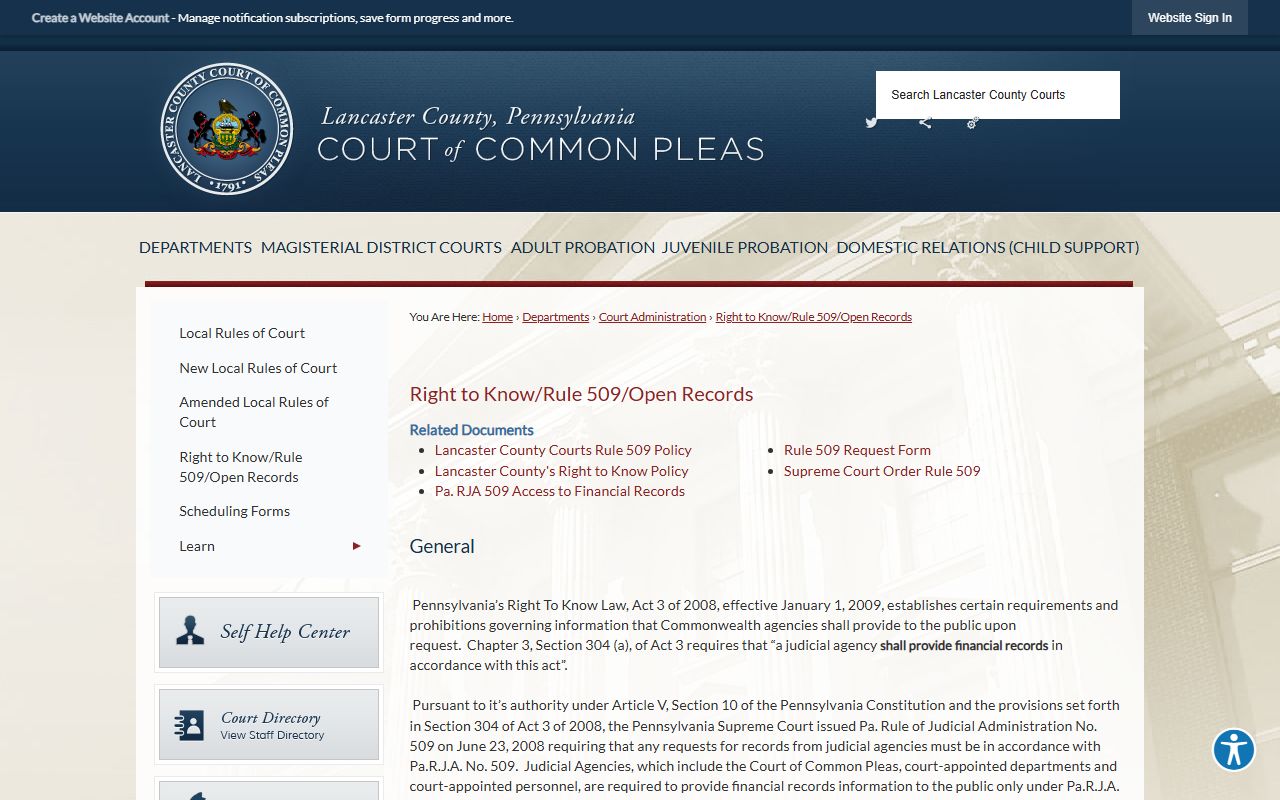
A handful of laws shape what is public and what is sealed. Each one below has a plain-English note.
Key Statutes:
Pennsylvania Title 65 (Right-to-Know Law) - sets public access rights, response deadlines, and appeals for local agency records.
18 Pa.C.S. Chapter 91 (CHRIA) - controls how criminal history records are shared, corrected, and expunged.
42 Pa.C.S. (Judicial Code) - sets court jurisdiction and the rules for juvenile and Orphans' Court matters.
Records That Are Restricted or Confidential
Some Lancaster County court records are closed to the general public. Juvenile cases usually do not show in a public search. Expunged and limited-access cases are removed from open view, though law enforcement and the courts may still see them. Adoption files, mental health commitments, and sealed search warrants are also kept private. Social Security numbers and financial account numbers are redacted under the public access policy.
The Unified Judicial System publishes the policy that governs what a public search can and cannot return.
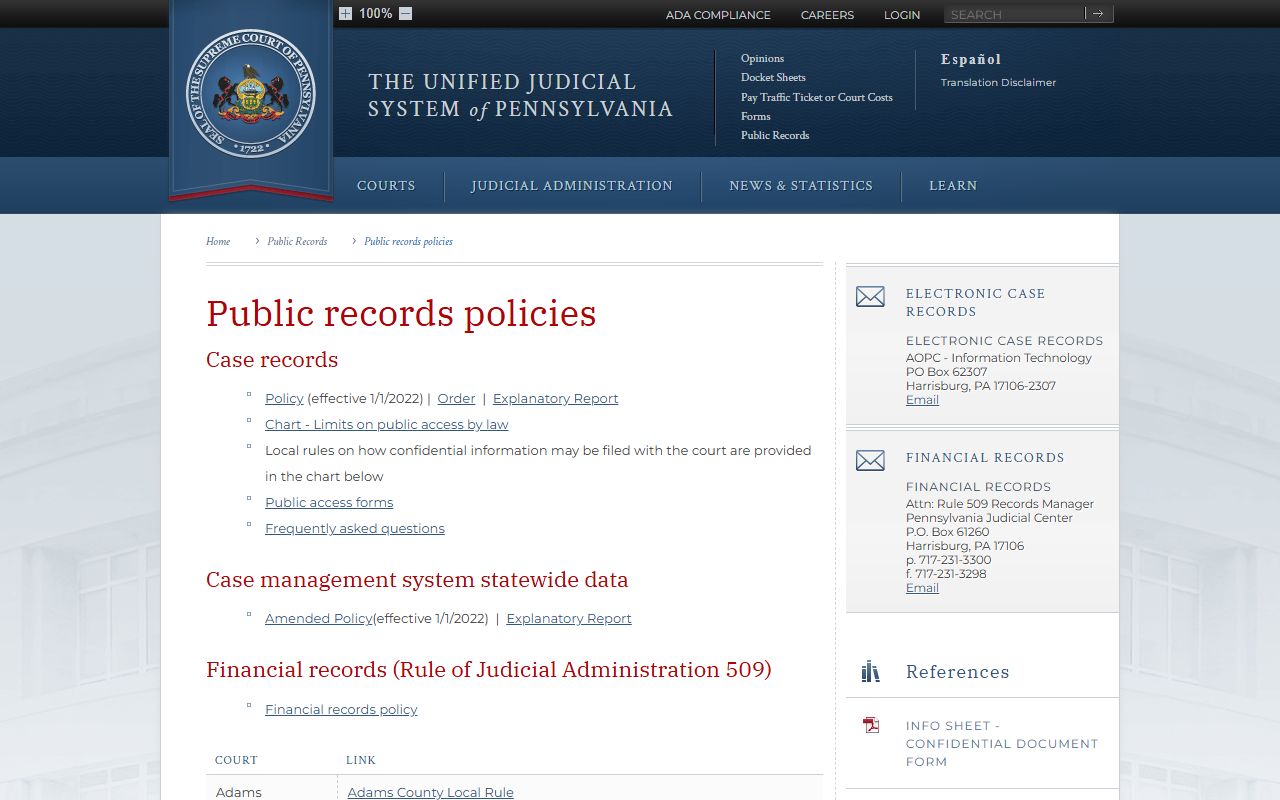
To view a sealed file, a person usually needs to be a party, an attorney, or someone the court has authorized. To clear a record, you file an expungement or limited-access petition with the Clerk of Courts. That process needs a state police background check and a filing fee.
Specialty Court Programs in Lancaster County
Lancaster County runs civil diversion programs that change how some cases move. The Residential Mortgage Foreclosure Diversion Program brings homeowners, lenders, and counsel into a structured process before a foreclosure case proceeds in the normal way. The Consumer Credit Collections Diversion Program does something similar for credit-card collection cases. Both appear as case categories on the civil portal, so a person searching a debt or foreclosure case may see that program label on the docket.
These are court-supervised tracks, not criminal treatment courts. They are listed among the popular pages on the Court of Common Pleas site.
Lancaster County Sheriff and Jail
The Lancaster County Sheriff's Office is led by Sheriff Christopher R. Leppler. Deputies provide courthouse security at 50 North Duke Street, screen visitors, serve warrants, and transport prisoners. The office reports that deputies screen about 1,500 people and 1,300 items through security each day. The Sheriff's warrant unit also oversees thousands of court bench warrants and tens of thousands of Magisterial District Court warrants.
Custody and warrant questions have their own pages. For the jail roster, see Lancaster County inmate records. For active warrants, see warrant records. The Sheriff also posts a scam warning: the office never demands payment by phone, gift card, or money card for court costs or fines.
Marriage, Divorce, and Orphans' Court Records
Marriage licenses and estate matters run through the Register of Wills and Clerk of Orphans' Court. Divorce is different. A divorce is a civil case filed with the Prothonotary, so a divorce search starts on the civil portal. See marriage and divorce records for the license process and probate and Orphans' Court records for estates, guardianships, and adoptions.
- Testator
- A person who leaves a valid will at death.
- Executor
- The person named in a will to settle the estate.
- Intestate
- Dying with no valid will, so state law decides who inherits.
Lancaster County Court Records Fees
Fees depend on the office and the record. The Clerk of Courts charges a set fee for a criminal record search and a per-copy fee for documents. The Register of Wills charges for marriage licenses and certified marriage copies. Court costs change over time, so confirm the current amount with the office before you mail a payment. Many offices do not take personal checks.
| Item | Amount |
|---|---|
| Criminal record search (Clerk of Courts) | $21.50 per search |
| Certified copy (Clerk of Courts) | $8.75 each |
| Plain copy | $0.25 per page |
| Marriage application and license | $60 |
| Certified marriage copy | $10 |
How to Interpret Lancaster County Court Records
Court records use terms that trip up new readers. A charge is not a conviction. A disposition is the outcome. A continuance is a delay. A docket number that starts with CP is a Court of Common Pleas case; one that starts with MJ is a Magisterial District Court case. An OTN, or offense tracking number, ties together the charges in a criminal case across the system.
One result does not always tell the full story. A Lancaster County Clerk of Courts record check shows only Lancaster County convictions. For a statewide criminal history, a person uses the Pennsylvania State Police PATCH system. The court dockets page goes deeper into reading docket entries.
Accuracy and Record Limitations
Online records can lag behind the counter. A case filed today may take time to post. A disposition entered in court may not update the same hour. A missing inmate or warrant result can mean a transfer, a spelling mismatch, or a record not yet refreshed, not always that nothing exists.
Note: Confirm any detail that matters with the office that keeps the file before you rely on it for a job, a filing, or a legal step.
History of Lancaster County Courts
Lancaster County is one of Pennsylvania's older counties and has long served as a regional legal center. Today its court work centers on the courthouse at 50 North Duke Street in the city of Lancaster. The building houses the Prothonotary, the Clerk of Courts, the Register of Wills and Clerk of Orphans' Court, the courtrooms, and access to the Law Library. The county now runs civil search through CountySuite, statewide docket search through UJS, probate and marriage search through Paperless Search, and a public inmate search.
The official courthouse directions page shows the North Duke Street building that anchors county court operations.
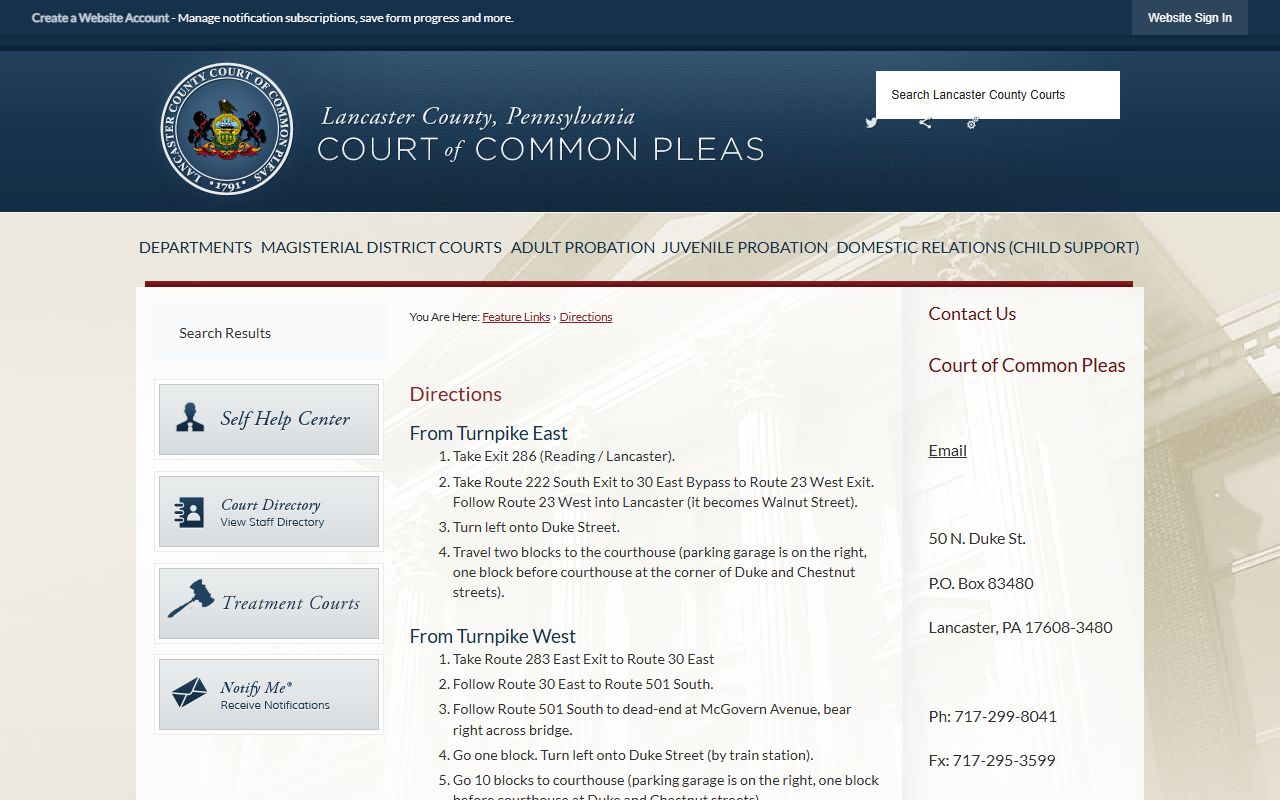
Inside, the upper floors hold the filing offices and courtrooms, so first-time visitors should allow time to find the right counter.
One local change stands out. Effective January 1, 2017, public cell phones and audio-video recording devices were banned in court facilities. That rule still shapes a courthouse visit today.
Frequently Asked Questions
What court handles Lancaster County court records?
The Court of Common Pleas is the county's general trial court. Civil records are kept by the Prothonotary. Criminal and juvenile records are kept by the Clerk of Courts. Probate, estate, and marriage records are handled by the Register of Wills and Clerk of Orphans' Court. The local Magisterial District Judges handle traffic, summary, landlord-tenant, and small civil claims.
How do I search civil court records?
Use the Prothonotary's CountySuite Civil Public Search. You can search by name, case number, participant name, participant address, or reference number. Advanced filters cover date range, case category, judgment-only results, and attorney inclusion. For a certified copy, contact the Prothonotary.
Can I bring my phone into the courthouse?
Court pages state that public cell phones and audio-video recording devices are not allowed in court facilities. The Register of Wills page says a phone or smart watch must go into a security pouch from the Sheriff's Office until you leave the building. Print what you need before you arrive.
More on the Lancaster County Court Records FAQ page.