
About the Lancaster County Clerk of Courts
Pennsylvania does not use one single court clerk. Lancaster County splits the job across offices, and the Clerk of Courts is the one tied to criminal cases. The office calls itself the chief filing office for the Court of Common Pleas in both criminal and juvenile matters. The current Clerk of Courts is Nicky Woods. All records are open to the public unless a law or court order closes them.
The office sits on the second floor of the courthouse at 50 North Duke Street in the city of Lancaster. It records, maintains, and processes criminal and juvenile files for the Criminal Division. It also assesses court costs and fines, licenses private detectives, prepares prison commitments and bail, and handles motions, petitions, summary appeals, and appeals to the state's high courts. If you want a civil case, a divorce, custody, or a passport, you need the Prothonotary instead, not this office.
The county posts the office's full scope and contact details on its official page.
You can review the office overview on the Lancaster County Clerk of Courts page, which lays out what the office files and what it leaves to other offices.
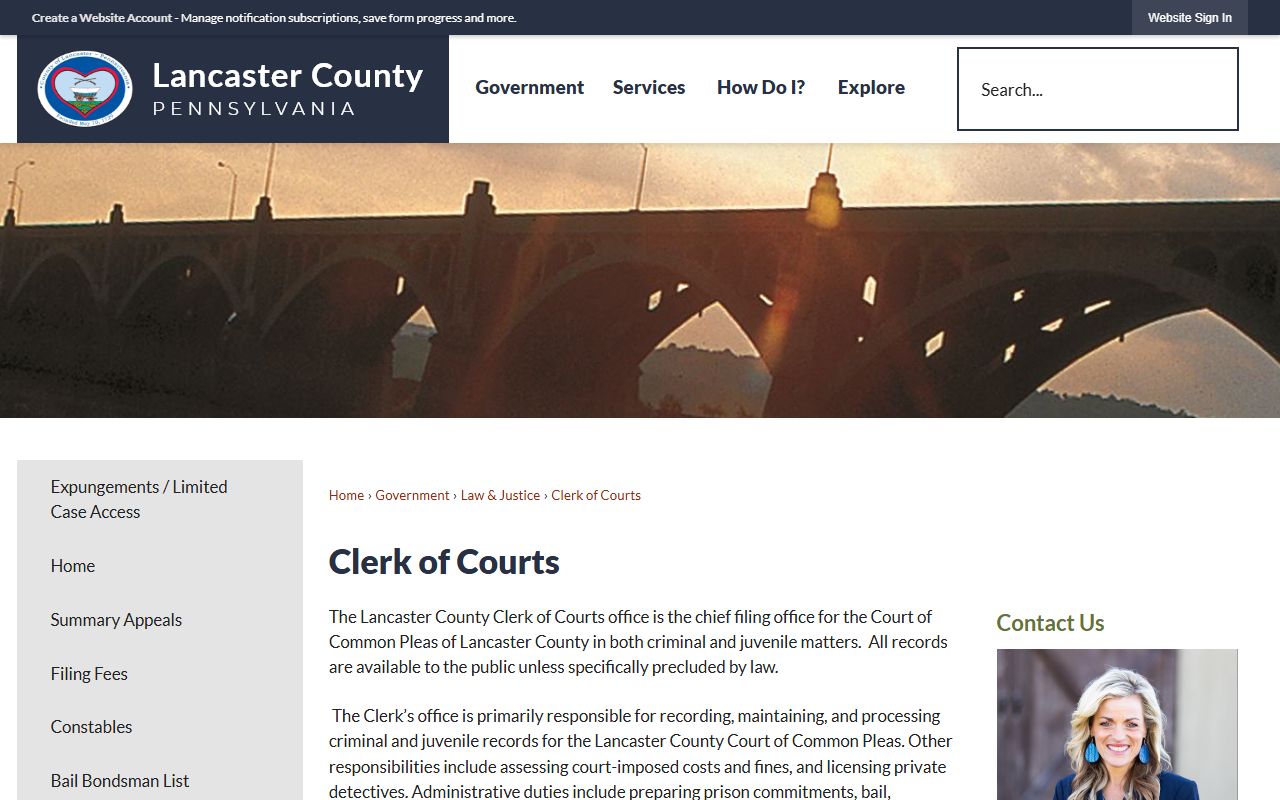
That page is the best first stop before any visit, since it confirms hours and what the counter can and cannot do.
Lancaster County Clerk of Courts
Clerk of Courts: Nicky Woods
50 N. Duke St., 2nd Floor
Lancaster, PA 17602
717-299-8275
Hours: Mon-Fri 8:30 a.m.-5:00 p.m.
Filing hours: 8:30 a.m.-4:30 p.m.
What the Clerk of Courts Does in Lancaster County
The work of the Clerk of Courts runs the full length of a criminal case. The office takes in the charging papers, tracks each motion and petition, logs bail, and records the sentence once a case ends. It moves criminal and summary appeals up to the Court of Common Pleas and on to the Pennsylvania Superior and Supreme Courts. It also tallies court costs and fines, which is why fines and restitution show up in its files.
Beyond case files, the office holds a few duties that surprise people. It licenses private detectives. It prepares prison commitments and bail paperwork. It accepts bonds filed by tax collectors and constables, plus financial statements from townships and boroughs. The list below covers the core jobs handled at the criminal counter.
- File and keep criminal and juvenile records for the Court of Common Pleas Criminal Division.
- Assess court costs, fines, and restitution tied to criminal cases.
- Process motions, petitions, summary appeals, and appeals to the state appellate courts.
- Prepare prison commitments and bail, and accept warrants, name changes, and summary convictions.
- License private detectives and accept bonds from tax collectors and constables.
- Conduct criminal background searches and process expungements.
Juvenile files are the main exception to open access. Those records are usually closed to the public, so the counter will not hand a juvenile file to just anyone.
How to Request a Lancaster County Criminal Record Check
A Lancaster County conviction search runs through a written request only. The Clerk of Courts does not take record-search requests by phone. Private individuals mail a letter with the subject's identifying details and a certified check. The office then mails back an official letter under the court seal. That letter lists the criminal charges, the offense date, and the disposition of any Lancaster County case, or it states that no record was found.
Scope matters here. The letter only covers convictions in Lancaster County. It is not a statewide criminal history. For records across all of Pennsylvania, a person uses the State Police PATCH system instead. Give the office every name a subject has used, because a missed alias can mean a missed record.
- Write a request letter to the Clerk of Courts. Phone requests are not accepted.
- Include the subject's full name, address, date of birth, and full Social Security number.
- List all aliases, maiden names, and prior married names you know.
- Add a certified check payable to "Clerk of Courts" for the search fee.
- Note whether you also need plain copies or certified copies, which carry added fees.
- Mail the packet to 50 N. Duke St., 2nd Floor, Lancaster, PA 17602, and wait for the sealed-letter reply.
Government agencies and police departments follow a slightly different path. They may submit the request in writing or by fax on official letterhead, with the same name, address, date of birth, and Social Security number. The letterhead is required before the office will run an agency search.
The county FAQ spells out the public-access limits behind these searches.
You can read those limits on the Clerk of Courts public access FAQ, which explains why some files are open and others are not.
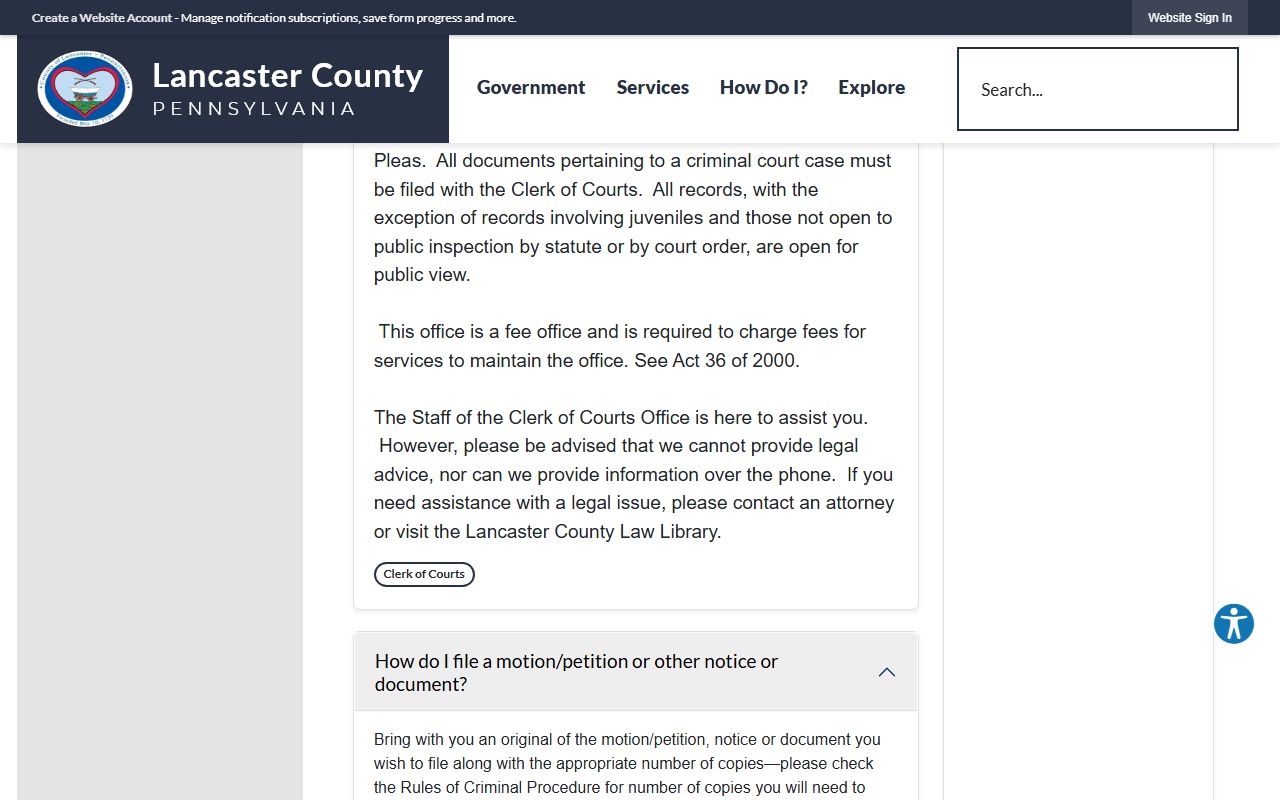
The FAQ also confirms that juvenile cases and statute-closed records stay out of a public search, so a clean result does not always mean a clean past.
Note: A Clerk of Courts record-check letter shows Lancaster County convictions only, so use PSP PATCH when you need a full statewide criminal history.
Clerk of Courts Records Request Fields
A record-check letter only works if it carries the right details. The office needs enough to match the subject to a file and rule out the wrong person. The table sets out each field, whether it is required, and a short note on why. Missing items, especially the Social Security number or payment, will slow or stop the search.
| Field / Requirement | Required | Notes |
|---|---|---|
| Requester letter | Yes | Written request only; no phone requests. |
| Subject name | Yes | Use the full legal name. |
| Subject address | Yes | Required by the office FAQ. |
| Date of birth | Yes | Required for the record check. |
| Full Social Security number | Yes | Full number, not the last four. |
| Aliases / maiden / prior married names | Recommended | List every known name to catch all records. |
| Certified check | Yes | Payable to "Clerk of Courts." |
| Official letterhead | Agencies only | Required for government or police requests. |
| Copy request | Optional | Plain copies mailed after fees clear. |
| Certified copy request | Optional | Added fee per certified copy. |
Agencies skip the certified-check step in many cases, but private requesters should not. The office does not run on personal checks for these searches.
Lancaster County Clerk of Courts Fees
The office charges a set fee for a criminal record search and a per-copy fee for documents. Court costs can change over time, so it is wise to confirm the current amount before you mail a payment. Payment for a record search comes by certified check made out to the office, not a personal check. The table lists the published fees from the Clerk of Courts FAQ.
| Service | Fee |
|---|---|
| Criminal record search | $21.50 per search |
| Certified copy | $8.75 per certified copy |
| Plain copy | $0.25 per copy |
A certified copy carries a court seal and is the version courts and many agencies want. A plain copy is fine for personal reference but is not a certified document. Order the type the receiving party asks for, since a swap can mean a second trip or a second mailing.
Docket sheets and secure court summaries are also available in hard copy on request at the per-page copy rate.
Expungement and Limited Access in Lancaster County
To clear an eligible criminal record from public view, a person files an expungement or limited-access petition with the Clerk of Courts. Limited access is Pennsylvania's record-sealing track. It hides a record from the general public while keeping it open to law enforcement and the courts where the law allows. Expungement goes further and removes eligible records, though some can stay available to agencies under statute. Neither is automatic at the counter, and both follow court rules.
Every petition must attach the required Pennsylvania State Police background check under Pa.R.Crim.P. 490 and 790. Petitioners pull the Offense Tracking Number and offense details from UJS docket sheets. The county lists the filing fee as $137.00 for an adult case and $36.75 for a juvenile case. Act 56 of 2018 widened sealing to cover more offense types, including some first-degree misdemeanors. A petition can fail for an ineligible offense, a missing background check, wrong docket or OTN data, unpaid costs, a new conviction, a Commonwealth objection, or a filing in the wrong court.
The prison division of the county posts the filing rules and the required attachments.
Those filing rules sit on the Lancaster County Expungements and Limited Case Access page, which spells out the background-check requirement.
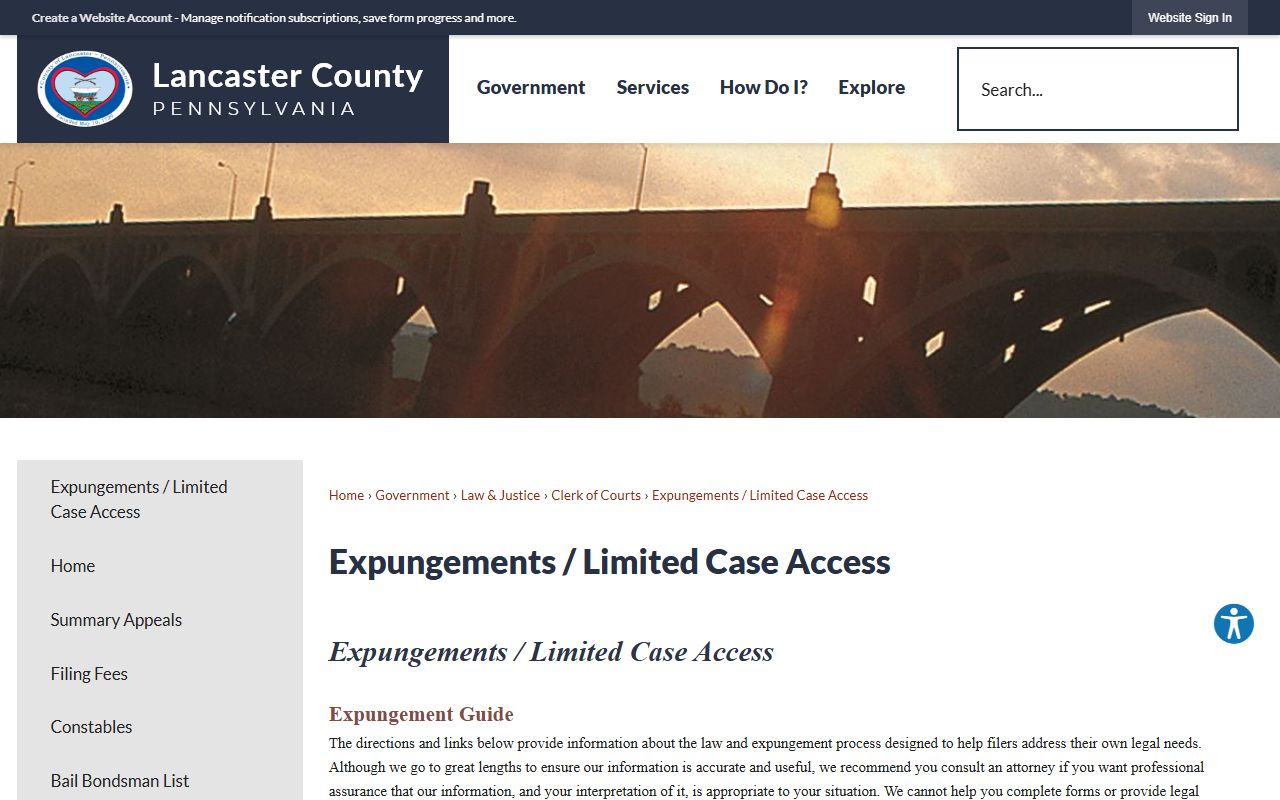
Read that page before you file, since the wrong docket number or a missing State Police check is a common reason a petition gets bounced.
The order of steps matters. Get the background check first, then prepare the petition, then file with the Clerk of Courts, then obtain a signed court order. The State Police act on a record only after they receive that court order. You can start the state-side process on the official service page.
The Pennsylvania State Police expungement service explains how the agency processes a record once a court order arrives from the Clerk of Courts.
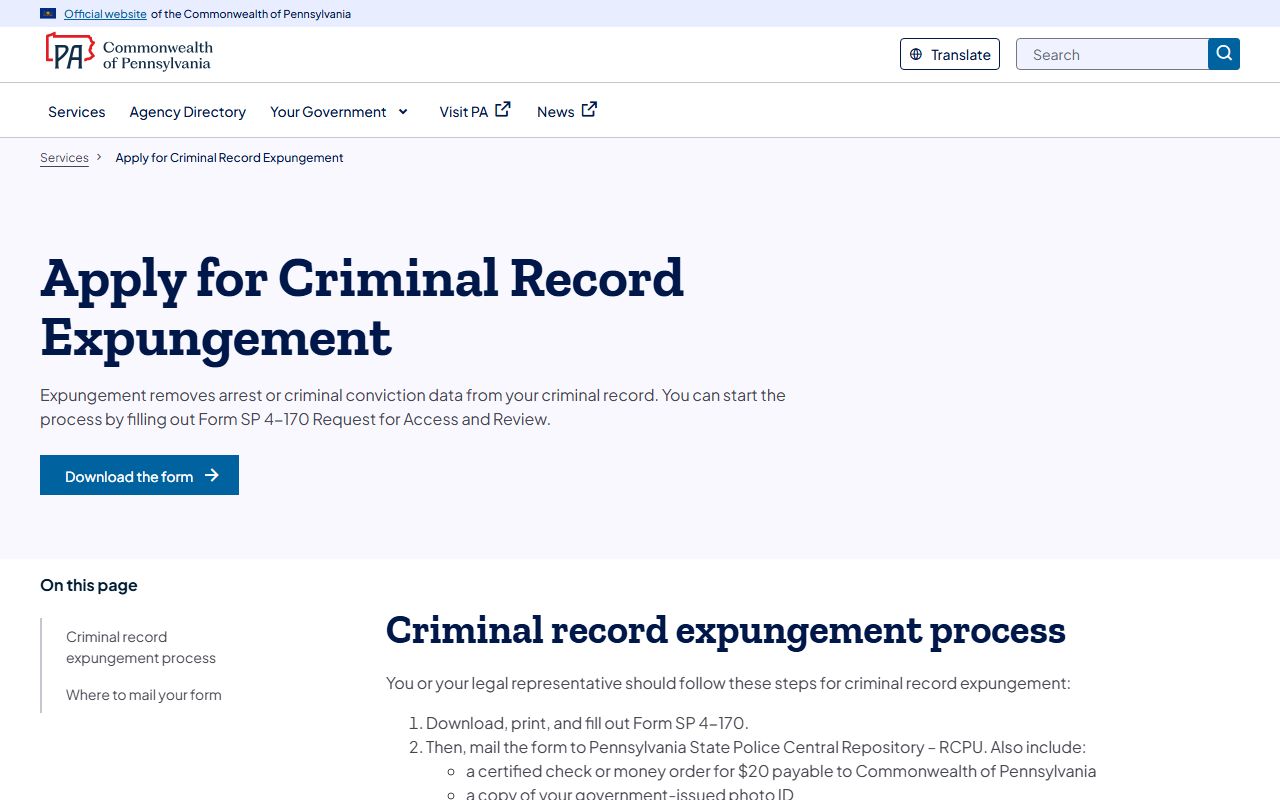
That state step is the last link in the chain, so a record does not change until the order moves from the court to the State Police.
Searching Criminal Dockets Online
For a quick look at a criminal case, the easiest public start is the statewide docket system, not a mailed letter. Lancaster County criminal, summary, and Magisterial District Court dockets show on the Pennsylvania UJS Case Search. You can search by participant name, docket number, OTN, complaint number, or incident number. The docket sheet shows charges, the statute, bail, case events, and the disposition.
A docket sheet and a Clerk of Courts letter are not the same thing. A docket is a free online record. The Clerk letter is a certified, court-sealed result for a fee. For deeper help reading a docket, see the court dockets page. For arrest-focused records, see arrest records, and for the full case picture, see court records.
- OTN
- Offense Tracking Number; ties the charges in a criminal case together across the system.
- Disposition
- The outcome of a charge or case, such as guilty, not guilty, or dismissed.
- Expungement
- The legal removal of eligible criminal history records from public view.