
Pennsylvania Right-to-Know Law and Lancaster County Public Records
Pennsylvania opens government records through the Right-to-Know Law. The law sits in Title 65 of the statutes, at 65 P.S. sections 67.101 and following. It gives the public a right to ask for records held by state and local agencies. County offices in Lancaster County are local agencies, so most of their administrative records fall under this law. The law also sets response deadlines and an appeal path when a request is refused. You can read it on the Pennsylvania General Assembly page for Title 65.
Anyone can file a request. You do not need to be a resident, and you do not have to say why you want the record. A public record is a document an agency makes, holds, or uses in its work, unless a law or a listed exemption keeps it private. The county posts its open records links in one place. The official Lancaster County public records page points to court, criminal, civil, deed, marriage, probate, and forms resources.
That single page is a good map of where county records live. It is the first stop for most public records work.
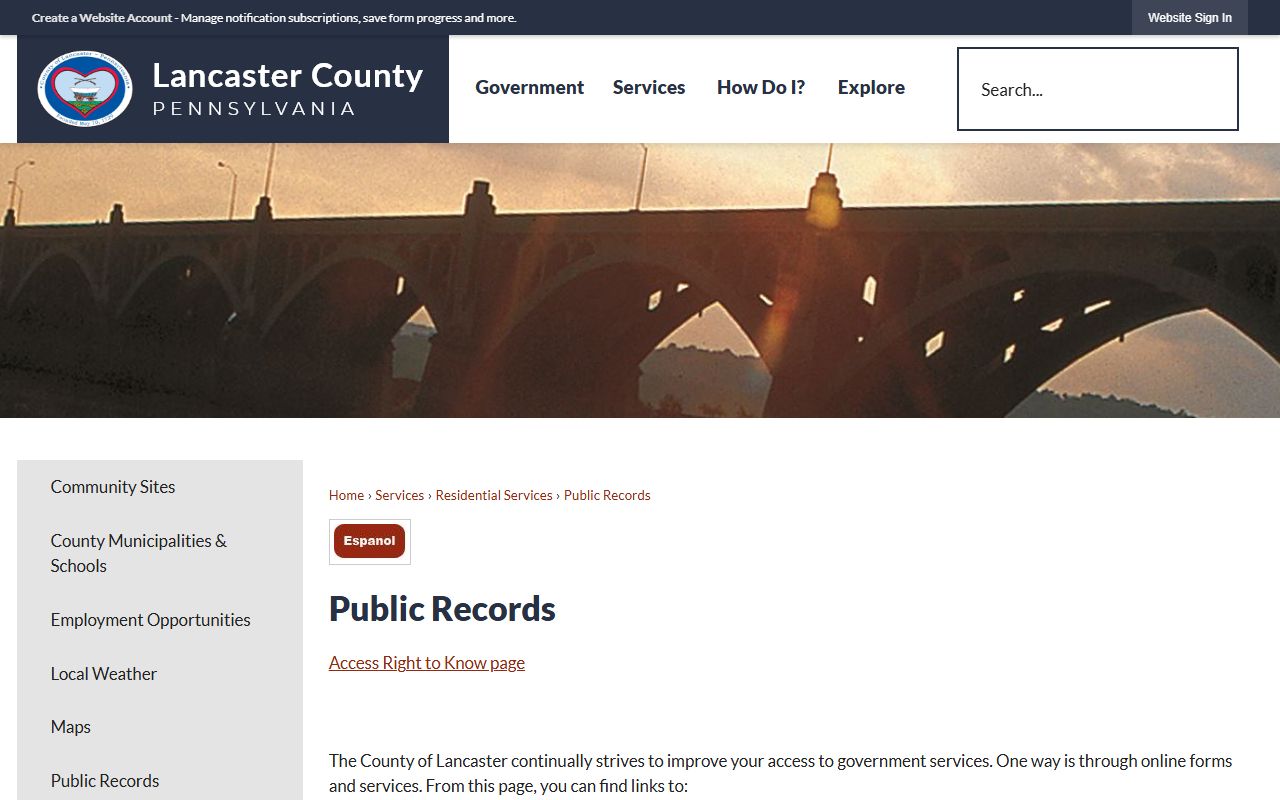
The page groups records by type, so it helps you spot the right office before you draft a single line of a request.
What Records the Lancaster County Offices Keep
County offices hold a wide spread of public records beyond the courts. The Recorder of Deeds keeps land records, deeds, and mortgages. Other offices handle business and assumed-name filings, tax claim records, and property assessment data. The Register of Wills and Clerk of Orphans' Court keeps marriage licenses and estate files. The court offices keep civil and criminal dockets. So a Lancaster County public records search can point to several different counters, and each one runs its own request process.
The main groups break down by office. The list below shows the common record types and where they sit.
- Land and property records - deeds, mortgages, and liens kept by the Recorder of Deeds.
- Vital and estate records - marriage licenses, probate, and estate files at the Register of Wills and Orphans' Court; see Orphans' Court records.
- Civil court records - complaints, judgments, and liens filed with the Prothonotary.
- Criminal court records - charges, dispositions, and sentences filed with the Clerk of Courts.
- Tax and assessment records - tax claim, tax lien, and property assessment data held by county offices.
Note: many of these records are searchable online, but a certified copy or an older file may still call for a written request to the office that keeps it.
Court Records vs Ordinary Lancaster County Public Records
Here is the part that trips up most people. Pennsylvania's Right-to-Know Law does not make every court document available through an ordinary open records request. Courts and their clerks are treated as judicial agencies, and judicial agencies follow different rules. They release financial records under a court rule, Pa.R.J.A. 509, and they release case records under the statewide UJS Public Access Policy. So a request for a court docket does not go through the normal county channel.
The Office of Open Records spells this out. Its guidance lists which offices are judicial agencies and which are not. Courts, clerks of court, prothonotaries, clerks of Orphans' Court, county domestic relations offices, and county probation offices are judicial agencies. Sheriffs and District Attorneys are not. That means a Sheriff or District Attorney record follows the normal Right-to-Know framework, though law-enforcement exemptions can still apply. You can read the state guidance on the Office of Open Records judicial agencies page.
That page is worth a careful look before you send anything.
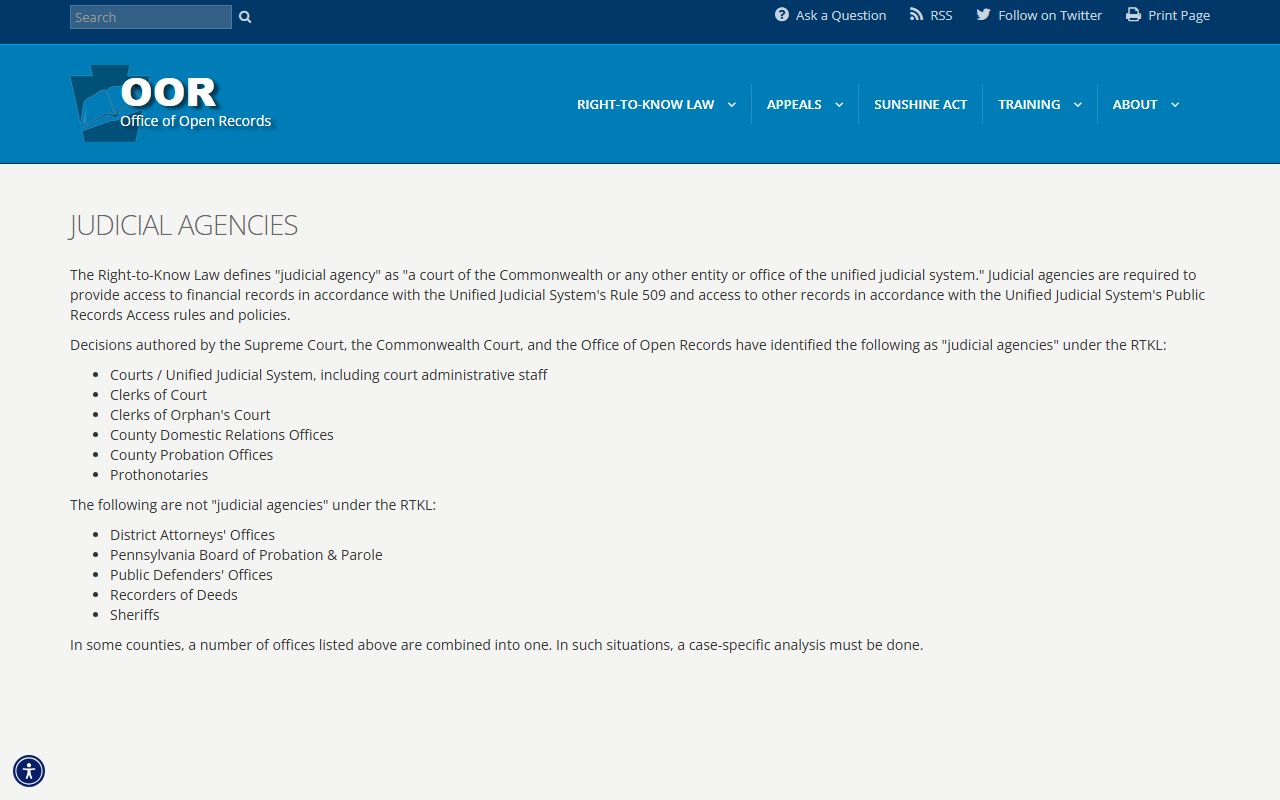
It explains why a court file and a sheriff file take two different roads, even when both sit in the same building.
The table below sorts the offices so you can route a request the first time.
| Office Type | Examples | Rule That Applies |
|---|---|---|
| Judicial agencies | Court of Common Pleas, Prothonotary, Clerk of Courts, Orphans' Court, domestic relations, probation | Pa.R.J.A. 509 for financial records; UJS Public Access Policy for case records. |
| Non-judicial county agencies | Sheriff, District Attorney, Recorder of Deeds, other county departments | Right-to-Know Law (Title 65); law-enforcement exemptions can apply. |
Case records also have their own search tools. Civil cases run through the Prothonotary's CountySuite portal, and criminal, traffic, and minor-court dockets run through the statewide UJS Case Search. A certified court copy still comes from the filing office, not from an open records officer.
How to File a Lancaster County Public Records Request
Filing is simple once you know the office. The first job is to match the record to the right custodian, since a court file and a county file take different paths. For a court financial record, the county routes the request to its Court Rule 509 Open Records Officer. For a case record, you search UJS or CountySuite, or you ask the filing office for a copy. For a normal county record, you send a Right-to-Know request to that agency's open records officer.
- Identify the office that keeps the record. Land records go to the Recorder of Deeds, civil court files to the Prothonotary, criminal files to the Clerk of Courts, and estate files to the Register of Wills.
- Decide which law applies. A court record follows Rule 509 or the UJS policy; a normal county record follows the Right-to-Know Law.
- Describe the records clearly. Give names, dates, a case or docket number, and a date range so the office can find the file fast.
- Submit the request by mail, email, or the office's online channel, addressed to that agency's open records officer or filing counter.
- Wait for the response within the legal deadline, then pay any fees and pick up or receive the records.
A written request beats a phone call for records that need a copy. The Clerk of Courts, for example, does not take phone requests for a criminal record check. That search must come in writing.
Lancaster County Public Records Request Form Fields
A clear request gets a faster answer. Most open records officers want the same core facts, and a court office wants a few more for a record check. The table lists the fields a Lancaster County public records request should include, whether you write a letter or use a form.
| Field | Required | Notes |
|---|---|---|
| Requester Name | Yes | Your full name; an address helps the office mail a reply. |
| Description of Records | Yes | Name the record type, the office, and any case, docket, or instrument number. |
| Date Range | No | A start and end date narrows a large search and cuts the fee. |
| Format Preference | No | Paper copy, certified copy, or electronic file where the office offers it. |
| Subject details (record checks) | Conditional | A Clerk of Courts criminal check needs the subject's name, address, date of birth, and full Social Security number. |
| Payment | Conditional | A certified check payable to the office; many counters do not take personal checks. |
Include every name a person has used when the record is tied to an individual. The Clerk of Courts asks for aliases, maiden names, and prior married names so a search does not miss a match.
Response Timelines for Lancaster County Public Records
The Right-to-Know Law sets a clock for normal county records. An agency must answer a written request within five business days. The office can either grant the request, deny it, or ask for more time. If it needs more time, it sends a written notice with a reason and a date when it will respond. A delay can come from a large search, a legal review, or a record that sits off-site.
Court records run on a different track. A financial record request under Rule 509 follows the court's own process through the Rule 509 Open Records Officer. A case record is not really a timed request at all, because you search it on UJS or CountySuite, or you ask the filing office for a copy. So a court file may come back faster than a normal request, or slower if it needs a certified copy and a fee.
Note: if a county office misses the five-day window with no extension notice, the law treats the silence as a denial you can appeal.
Fees for Lancaster County Public Records
Fees depend on the office and the record. Court offices publish set fees for searches and copies. The Clerk of Courts charges a flat fee for a criminal record search and a separate fee for a certified copy, plus a per-page charge for plain copies. The Prothonotary and the Register of Wills set their own fee schedules, and a normal Right-to-Know request can carry a copy charge and, in some cases, a fee for staff time. Court costs change over time, so confirm the current amount with the office before you mail a payment.
| Item | Amount |
|---|---|
| Criminal record search (Clerk of Courts) | $21.50 per search |
| Certified copy (Clerk of Courts) | $8.75 each |
| Plain copy (Clerk of Courts) | $0.25 per page |
| Hard-copy docket sheet or court summary | $0.25 per page |
| Other county offices | Each office sets its own fee schedule |
Many offices want a certified check or a money order, not a personal check. A Clerk of Courts record search, for instance, must be paid by certified check made out to the office. Add copy and certification fees on top of the search fee when you order documents.
Lancaster County Public Records That Are Exempt
Not every record is open. The Right-to-Know Law lists exemptions, and other statutes close off whole categories. On the court side, juvenile cases, expunged cases, and limited-access cases under the Clean Slate rules do not show in a public search. Adoption files, mental health commitments, and sealed search warrants are kept private. Social Security numbers and financial account numbers are redacted under the UJS Public Access Policy.
Criminal history has its own law. The Criminal History Record Information Act, in 18 Pa.C.S. Chapter 91, controls how charges, dispositions, and expungements are shared. You can read it on the Pennsylvania page for Chapter 91 (CHRIA). A county docket search is not a full criminal history. A Clerk of Courts record check shows only Lancaster County convictions, so a statewide history comes from the Pennsylvania State Police PATCH system instead.
Law-enforcement records add another layer. Because the Sheriff and District Attorney are not judicial agencies, their records fall under the Right-to-Know Law, but criminal-investigation exemptions can still shield much of a file. The arrest and criminal records page covers what is public and what is closed in more detail.
Federal Records Tied to Lancaster County
Some records are not county records at all. A federal lawsuit, a federal criminal case, or a bankruptcy filing from Lancaster County does not sit in a county office. Those files run through the federal court system, and the public reaches them through PACER, the electronic public access service for federal courts. PACER covers appellate, district, and bankruptcy dockets across the country. Learn about access and accounts at the PACER service center.
PACER is the right tool when a county or state search comes up empty for a federal matter.
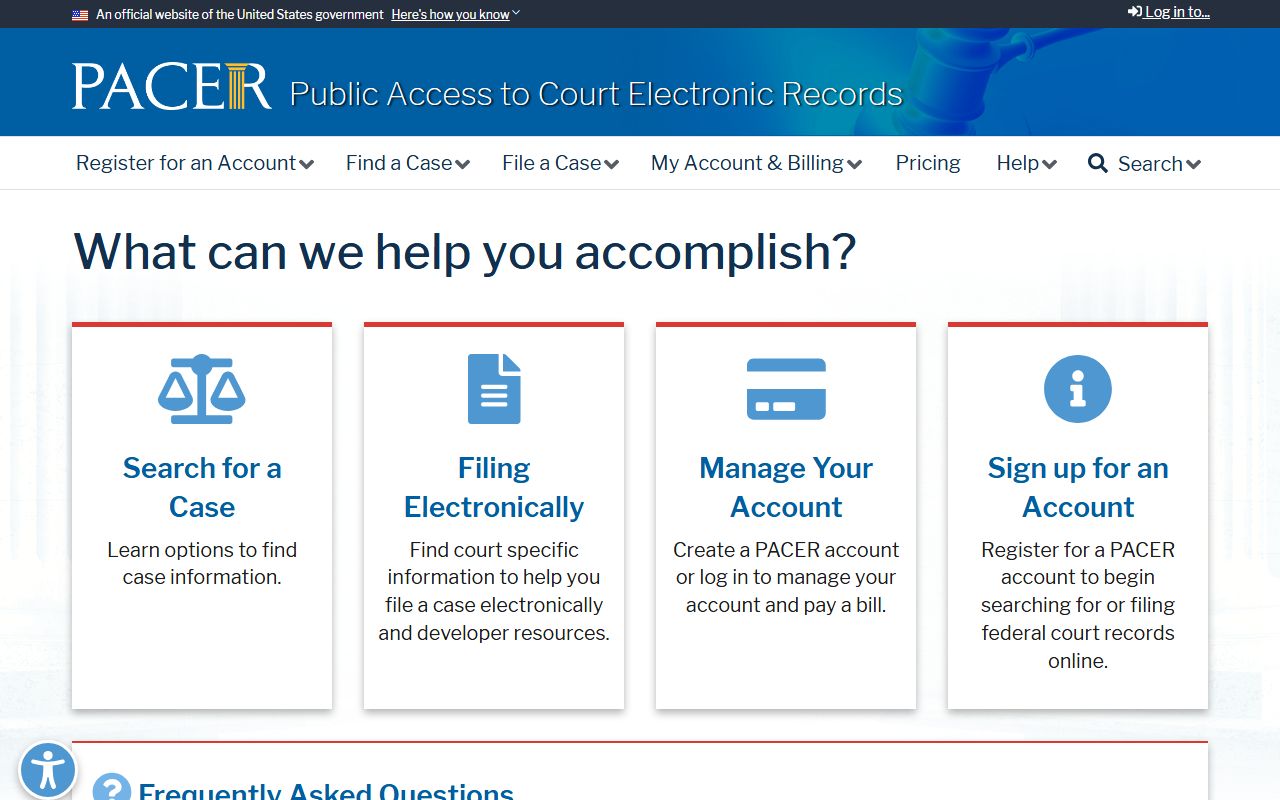
The service center handles sign-up, billing, and help, and it charges a small per-page fee for documents. Lancaster County sits within the U.S. District Court for the Eastern District of Pennsylvania, so federal civil and criminal cases from the county are filed there.
If a Lancaster County Public Records Request Is Denied
A denial is not the end of the road. For a normal county record under the Right-to-Know Law, you can appeal to the state Office of Open Records. The appeal must come within fifteen business days of the denial or the deemed denial. The office reviews the case and issues a written decision, and either side can then take the matter to court if needed.
Court records follow a separate path. A dispute over a court financial record goes through the Rule 509 process, not the Office of Open Records. The official source for the law is Title 65, and the state's full statute text sits online for anyone to read before filing an appeal.
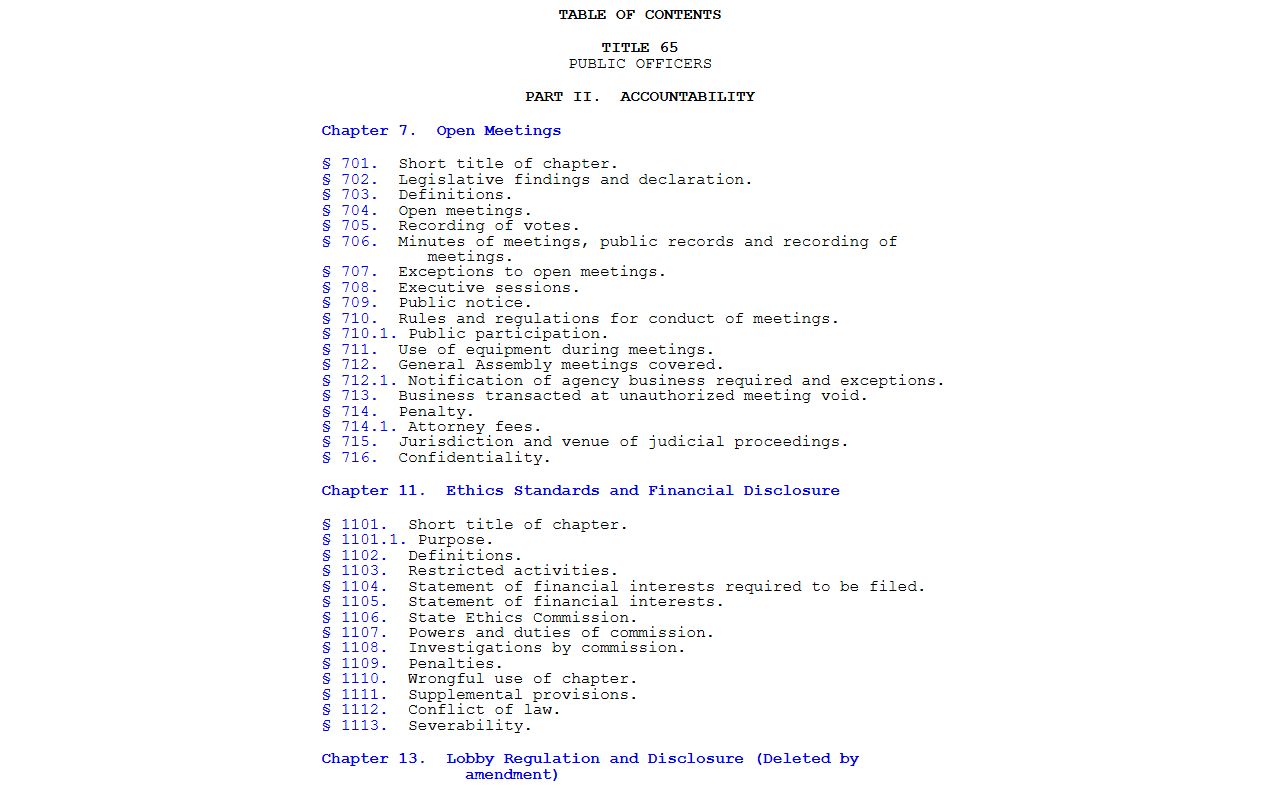
Reading the statute first helps you frame an appeal around the exact exemption the office cited. A clear, specific appeal stands a better chance than a broad complaint.